

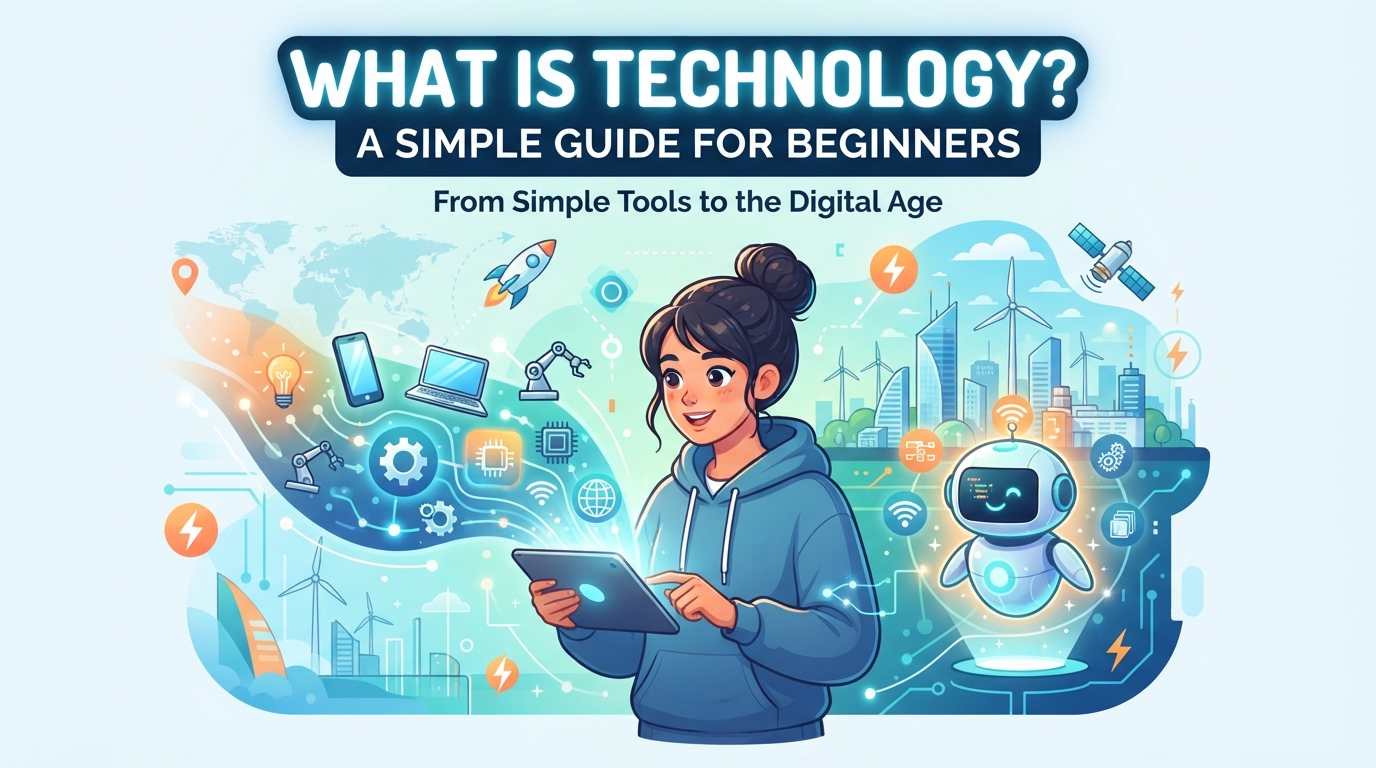
You use technology every day, from the alarm that wakes you up to the phone you scroll before bed. But if someone asked you to explain it, could you? Many people use it without ever stopping to think about what it really means. So, what is technology? This guide answers that question in plain language, with no jargon and no technical background needed.
A Simple Definition
Technology is the use of knowledge, tools, and skills to solve problems and make life easier. That’s it. It isn’t limited to computers or gadgets. A sharpened stone used to cut food thousands of years ago was technology. So is the smartphone in your pocket. The only difference is how advanced the tools have become.
The word comes from two Greek words: techne, meaning skill or craft, and logia, meaning study. Put together, it means the study or application of skills and tools. Whenever people take scientific knowledge and turn it into something useful, that’s technology at work.
Technology Is Older Than You Think
Many beginners assume technology began with computers or the internet. In reality, it began with the first humans. Early people made stone tools, learned to control fire, and invented the wheel. Each of these inventions solved a real problem: getting food, staying warm, or moving heavy things.
Over time, the pace picked up:
- Agriculture (about 10,000 years ago): Farming tools let people grow food instead of only hunting for it.
- The printing press (1400s): Books became affordable, and knowledge spread faster than ever.
- The Industrial Revolution (1700s–1800s): Machines and steam power transformed how goods were made.
- The electronic age (1900s): Radio, television, and early computers changed communication.
- The digital age (today): The internet, smartphones, and artificial intelligence connect the world in seconds.
Each stage built on the one before it. Technology grows the way a snowball does, with every new invention making the next one easier.
The Main Types of Technology
Technology covers a huge range of fields. Here are the main categories beginners should know.
Information Technology (IT). This covers computers, software, networks, and the internet. When you send an email, stream a video, or store photos in the cloud, you’re using IT.
Communication Technology. Phones, messaging apps, video calls, and social media let people connect across distances.
Medical Technology. X-ray machines, vaccines, digital thermometers, and robotic surgery help doctors diagnose and treat illness more effectively.
Transportation Technology. Cars, trains, airplanes, and now electric and self-driving vehicles move people and goods faster and more safely.
Energy Technology. Solar panels, wind turbines, and batteries produce and store the power that runs our homes and industries.
Agricultural Technology. Modern irrigation, tractors, and smart sensors help farmers grow more food using fewer resources.
Technology in Everyday Life
You may not notice it, but technology shapes almost every moment of your day.
In the morning, your phone alarm wakes you, and you might check the weather through an app. You cook breakfast on a stove or microwave, and you might commute by bus, car, or train. At work or school, you probably use a computer, the internet, or digital tools to learn and communicate. In the evening, you might watch a show on a streaming service, video call a relative, or order dinner through an app.
Even simple objects count. A pair of glasses, a refrigerator, and a ballpoint pen are all technologies. They exist because someone identified a problem and built a tool to solve it.
How Does Technology Work?
Most technology follows a simple pattern: input, process, output.
Take a calculator. You enter numbers (input), it performs the math (process), and it shows you the answer (output). A smartphone works the same way, only with far more inputs, faster processing, and many kinds of output.
Behind modern technology are a few core ideas:
- Hardware: The physical parts, like screens, chips, and batteries.
- Software: The instructions that tell hardware what to do, such as apps and operating systems.
- Networks: The connections that let devices share information, like Wi-Fi and the internet.
- Data: The information that technology collects, stores, and uses to make decisions.
You don’t need to master all of these to use technology well, but knowing the basics helps you feel more confident when something goes wrong or when you want to learn more.
The Benefits of Technology
Technology has improved life in countless ways.
- Convenience: Tasks that once took hours, like doing laundry or looking up information, now take minutes.
- Better health: Medicine and medical devices help people live longer, healthier lives.
- Global connection: You can talk to someone on the other side of the world instantly.
- Access to education: Free online courses and videos put learning within reach of almost anyone with an internet connection.
- Economic growth: Technology creates new industries, jobs, and business opportunities.
The Challenges and Risks
Technology is not perfect, and beginners should understand both sides.
Privacy concerns. Apps and websites collect data about you. Learning basic privacy settings helps protect your personal information.
Overuse and distraction. Too much screen time can affect sleep, focus, and mental well-being. Healthy habits matter.
Job changes. Automation can replace some jobs while creating others, which means people sometimes need to learn new skills.
Security threats. Scams, viruses, and hacking are real risks. Using strong passwords and being careful with unknown links goes a long way.
The digital divide. Not everyone has equal access to devices or the internet, which can widen gaps between communities.
How Beginners Can Start Learning Technology
If you feel behind, don’t worry. Everyone starts somewhere. Here are some practical first steps:
- Start with what you use. Learn the settings and features of your phone or computer.
- Use free resources. YouTube tutorials, free online courses, and library programs teach basics at your own pace.
- Practice safety first. Learn how to create strong passwords and spot suspicious emails.
- Stay curious. Ask questions, experiment, and don’t be afraid of making mistakes. Most errors can be undone.
- Learn one skill at a time. Master email, then video calls, then online shopping, rather than trying everything at once.
The Future of Technology
Technology keeps evolving. Artificial intelligence is helping computers understand language and images. Renewable energy is becoming cheaper and more common. Advances in biotechnology promise new treatments for diseases. Meanwhile, smart homes, wearable devices, and electric vehicles are becoming part of ordinary life.
No one can predict exactly what comes next, but one thing is certain: understanding the basics will help you adapt to whatever changes arrive.
Conclusion
Technology is not just for engineers or experts. It’s a human tool for solving problems, from a stone axe to a smartphone. Now that you know the answer to “what is technology?”, you can see it everywhere: in your home, your workplace, and your pocket. Approach it with curiosity, use it wisely, and keep learning. The more you understand it, the more it can work for you.
READ ALSO: https://aimodern.co.uk








Leave a Reply