

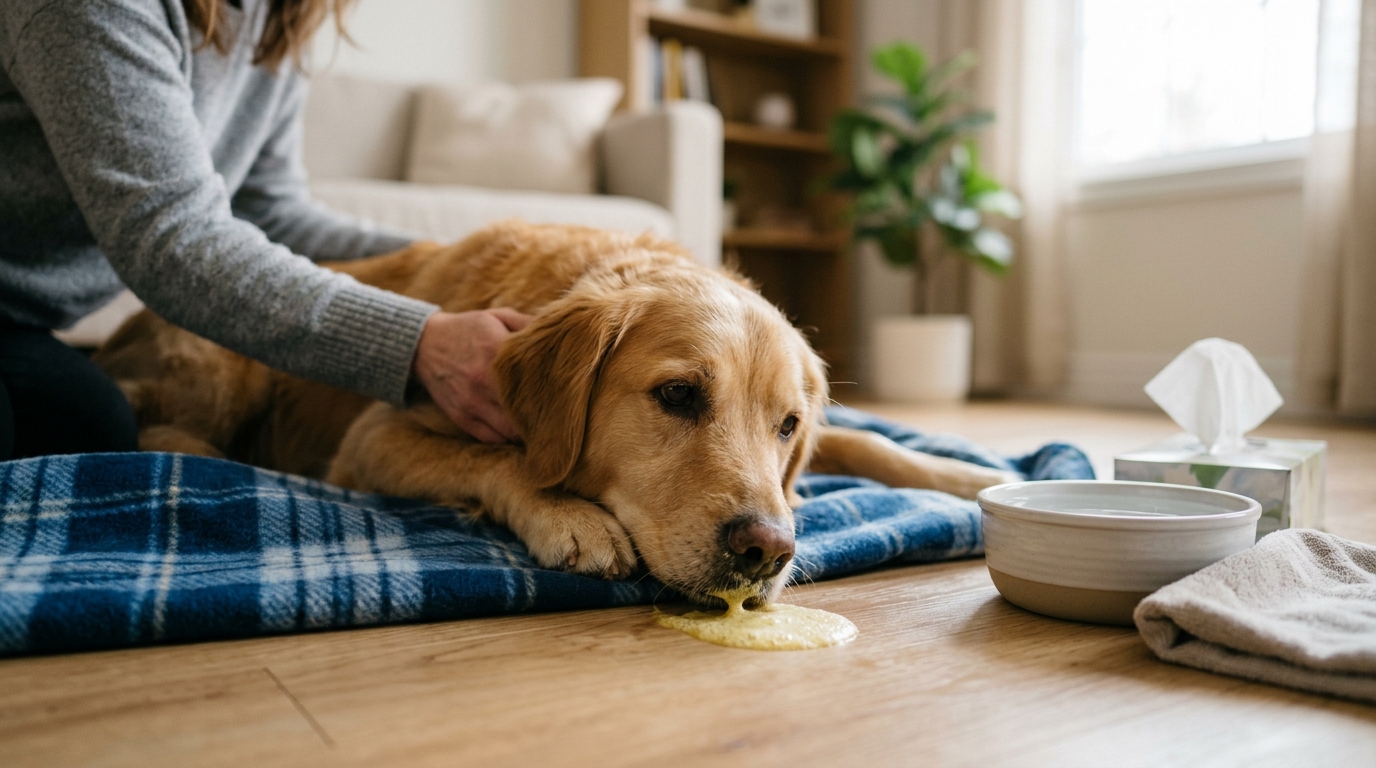
Few things worry a pet parent more than finding a puddle of yellow, foamy liquid on the floor first thing in the morning. If your dog just threw up and you are searching for dog vomiting yellow foam treatment at home, take a breath. In many cases the cause is mild and manageable with simple care. This guide explains why it happens, what you can safely do at home, and the warning signs that mean it is time to call your vet.
Why Do Dogs Vomit Yellow Foam?
The yellow color comes from bile, a digestive fluid made by the liver and stored in the gallbladder. Bile helps break down fat in the small intestine. When a dog’s stomach is empty, bile can flow backward into the stomach and irritate the lining. The result is yellow or greenish-yellow foam, often mixed with saliva and stomach acid.
Common causes include:
- Empty stomach: This is the most frequent reason. Dogs who go too long between meals, especially overnight, may vomit bile in the early morning. Vets call this bilious vomiting syndrome.
- Dietary indiscretion: Eating garbage, grass, spoiled food, or something unusual can upset the stomach.
- Sudden diet change: Switching foods too quickly often causes digestive upset.
- Gastritis: Inflammation of the stomach lining can trigger repeated vomiting.
- Eating too fast or exercising right after meals.
- Stress or anxiety: Travel, boarding, or changes at home can upset a dog’s digestion.
- Serious conditions: Pancreatitis, intestinal blockage, liver disease, kidney disease, and parasites can also cause yellow vomit.
Understanding the likely cause helps you decide whether home care is appropriate or whether your dog needs professional attention.
First, Check Whether Home Care Is Safe
Before starting any treatment, take a quick look at your dog. Home care is generally reasonable if your dog:
- Vomited only once or twice
- Is still bright, alert, and interested in surroundings
- Has no diarrhea, or only mild diarrhea
- Is an adult with no known chronic illness
- Has not eaten anything toxic or dangerous
Puppies, senior dogs, small breeds, and dogs with diabetes, kidney disease, or other health problems can become dehydrated and weak very quickly. For these dogs, call your veterinarian early rather than waiting.
Dog Vomiting Yellow Foam Treatment at Home: Step-by-Step Care
If your dog seems otherwise well, these steps can help settle the stomach.
1. Rest the Stomach for 8 to 12 Hours
Withhold food for 8 to 12 hours so the stomach lining can calm down. This applies to adult dogs only. Puppies and toy breeds should not fast this long because they are prone to low blood sugar, so ask your vet what is safe. Never withhold water unless your vet tells you to.
2. Offer Small Amounts of Water
Vomiting causes fluid loss, so hydration matters. Offer a few sips of fresh water every 15 to 30 minutes rather than letting your dog gulp a full bowl, which can trigger more vomiting. Ice cubes are a good option for dogs that drink too fast. Plain unflavored electrolyte solutions made for pets may also help, but check with your vet first.
3. Reintroduce Food with a Bland Diet
After the fasting period, if there has been no further vomiting, offer a small portion of a bland meal. A classic mix is boiled, skinless chicken breast with plain white rice, in roughly a 1-to-2 ratio of chicken to rice. Do not add salt, oil, butter, onions, or garlic. Plain pumpkin puree (not pie filling) can also be gentle on the digestive tract.
Start with a tablespoon or two for small dogs and a few tablespoons for larger dogs. If your dog keeps it down, offer small meals three to four times a day for two to three days, then slowly mix the regular food back in over several days.
4. Feed Smaller, More Frequent Meals
If your dog vomits yellow foam in the morning, the empty stomach is likely the culprit. Splitting daily food into three or four smaller meals, and offering a small snack late in the evening, often prevents bile from building up overnight. Many owners find this one change solves the problem.
5. Slow Down Fast Eaters
Slow-feeder bowls, puzzle feeders, or scattering kibble on a snuffle mat can reduce gulping and the stomach upset that follows.
6. Keep Your Dog Calm and Comfortable
Limit vigorous exercise for a day and provide a quiet, warm place to rest. Watch closely for any change in energy, appetite, or behavior.
What Not to Do
Well-meaning owners sometimes make things worse. Avoid these mistakes:
- Never give human medications such as ibuprofen, aspirin, or acetaminophen. They are toxic to dogs.
- Do not use anti-nausea or antacid medicine without veterinary guidance, as doses and safety vary.
- Do not force-feed or force water.
- Avoid fatty treats, table scraps, and dairy during recovery.
- Do not ignore repeated vomiting hoping it will pass on its own.
Warning Signs: When to Call the Vet
Home care has limits. Contact your veterinarian promptly, or go to an emergency clinic, if you notice any of the following:
- Vomiting more than two or three times in 24 hours
- Vomit containing blood, or looking like coffee grounds
- Lethargy, weakness, or collapse
- A swollen, painful, or hard abdomen
- Repeated unproductive retching, especially in deep-chested breeds (a possible sign of bloat, which is an emergency)
- Diarrhea along with vomiting
- Pale or dry gums, or signs of dehydration such as skin that stays tented when pinched
- Refusing food and water for more than a day
- Suspected ingestion of a toxin, foreign object, or toy
- Vomiting in a puppy, senior dog, or dog with an existing health condition
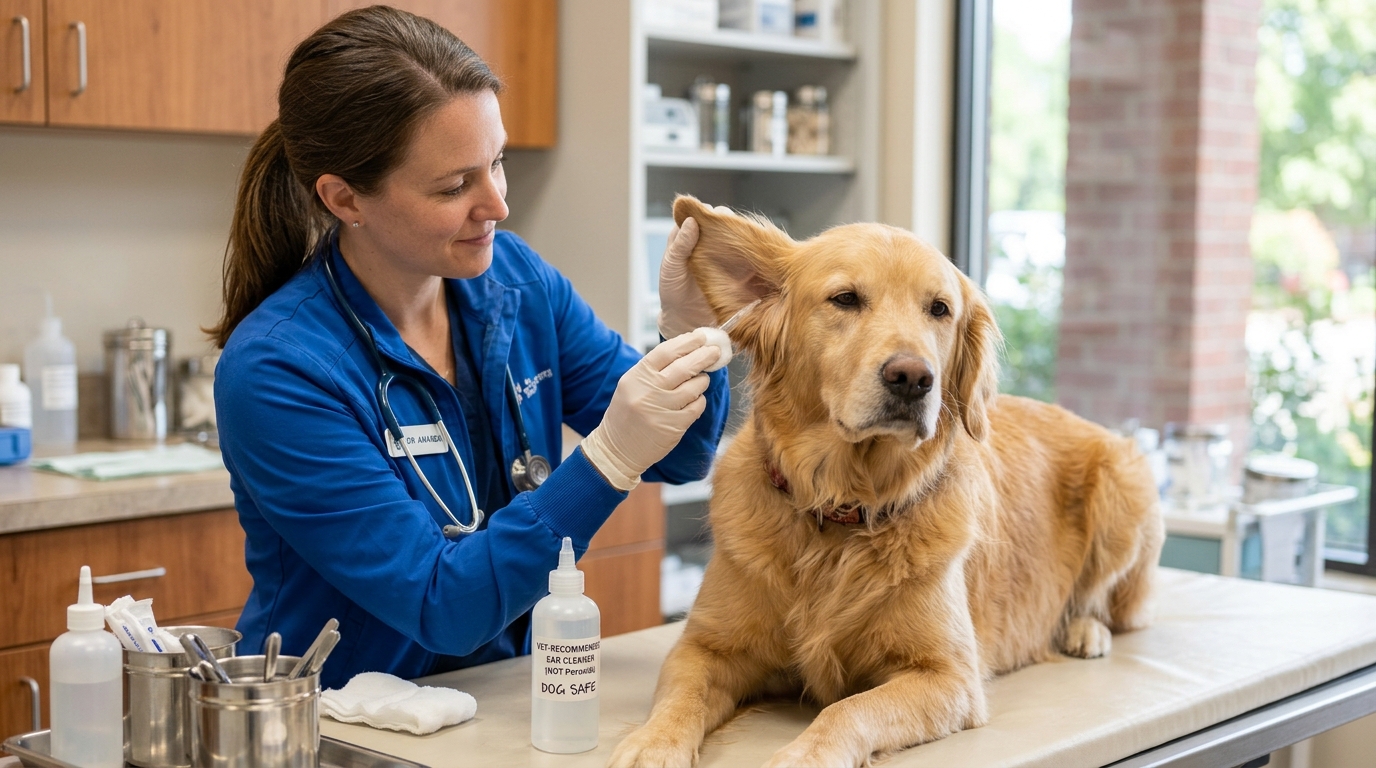
Your vet may recommend blood tests, X-rays, or ultrasound, and may prescribe anti-nausea medication, fluids, or a special diet. Early treatment often prevents a minor problem from becoming a serious one.
How to Prevent Yellow Foam Vomiting
Prevention is easier than treatment. Keep these habits in mind:
- Feed on a consistent schedule, with an evening snack if mornings are a problem.
- Change diets gradually over 7 to 10 days.
- Keep trash, spoiled food, and toxic plants out of reach.
- Supervise walks to stop scavenging.
- Keep up with deworming and regular vet checkups.
- Reduce stress with routine, exercise, and enrichment.
Final Thoughts
A single episode of yellow foamy vomit is usually caused by an empty stomach or minor irritation, and many dogs recover quickly with rest, hydration, and a bland diet. Knowing the basics of dog vomiting yellow foam treatment at home gives you the confidence to help your pet in the first hours, while staying alert for symptoms that call for a professional. When in doubt, trust your instincts and call your veterinarian. You know your dog best, and a quick phone call can bring peace of mind.
READ ALSO: https://aimodern.co.uk



Leave a Reply