

If your dog is shaking their head, scratching at their ears, or giving off a funky smell, you probably want to fix it fast. A bottle of hydrogen peroxide in the medicine cabinet looks like an easy solution, so it’s natural to wonder: can you put peroxide in a dog’s ear? The short answer is that it’s generally not recommended. This guide explains why, what the risks are, and what safer options exist.
Why Peroxide Seems Like a Good Idea
Hydrogen peroxide is a common household antiseptic. It fizzes when it touches wounds, which makes it feel like it’s “working,” and it’s cheap and easy to find. Many older pet-care tips and online forums still suggest it for cleaning ears or treating infections.
The problem is that what works on a scraped knee doesn’t necessarily work inside a dog’s ear canal. The anatomy is very different, and so are the risks.
Understanding the Dog Ear Canal
A dog’s ear canal is shaped like an “L.” It drops vertically from the opening, then turns sharply toward the eardrum. This design means fluid can easily get trapped in the horizontal section, where it can’t drain out on its own.
That trapped moisture is the main reason dogs are so prone to ear infections. Warm, damp, dark conditions are ideal for yeast and bacteria. Anything you put in the ear that leaves moisture behind can make things worse rather than better.
Why Vets Advise Against Peroxide
It Can Irritate and Damage Delicate Tissue
The skin lining the ear canal is thin and sensitive. Hydrogen peroxide works by releasing oxygen, which damages cells, including bacteria but also your dog’s healthy tissue. In an ear that’s already inflamed or sore, this can cause stinging, burning, and more swelling.
It Can Leave Moisture Behind
Peroxide is mostly water. When it breaks down, it leaves moisture in a part of the ear that’s hard to dry. For a dog already prone to yeast or bacterial overgrowth, that can encourage the very problem you were trying to solve.
It May Delay Healing
Repeated use of peroxide can irritate the lining of the ear and slow recovery. An ear that’s irritated by the “treatment” may look worse, smell worse, and be more painful, which can make an underlying infection harder to treat later.
The Eardrum Might Be Damaged
This is the most serious concern. If your dog has a ruptured or weakened eardrum, which isn’t something you can see at home, putting any harsh liquid in the ear can reach the middle ear. That may cause pain, balance problems, hearing loss, or deeper infection. Because you can’t check the eardrum yourself, it’s safest to avoid anything that could cause harm if it’s damaged.
It Doesn’t Treat the Real Cause
Ear problems in dogs usually have an underlying cause: allergies, yeast, bacteria, ear mites, foreign objects like grass seeds, or even polyps. Peroxide won’t fix any of these. Without a proper diagnosis, you’re guessing, and a guess can mean weeks of discomfort for your dog.
So, Can You Put Peroxide in a Dog’s Ear in Any Situation?
Most veterinarians say no, not as a routine home remedy. Some older sources mention diluted peroxide for occasional cleaning, but modern veterinary advice has moved away from this because safer, purpose-made products are readily available.
If a vet has specifically told you to use a diluted peroxide solution for your dog’s particular situation, follow their instructions exactly. Never do it on your own initiative, and never use it on an ear that’s red, swollen, painful, or producing discharge.
Signs Your Dog May Have an Ear Problem
Watch for these common symptoms:
- Frequent head shaking or tilting
- Scratching or pawing at the ear
- Redness or swelling of the ear flap or canal
- A strong, musty, or sour odor
- Brown, yellow, or black discharge
- Pain when you touch the ear
- Loss of balance or circling
- Rubbing the ear on furniture or carpet
Any of these is a reason to call your vet rather than start home treatment.
Safer Ways to Clean Your Dog’s Ears
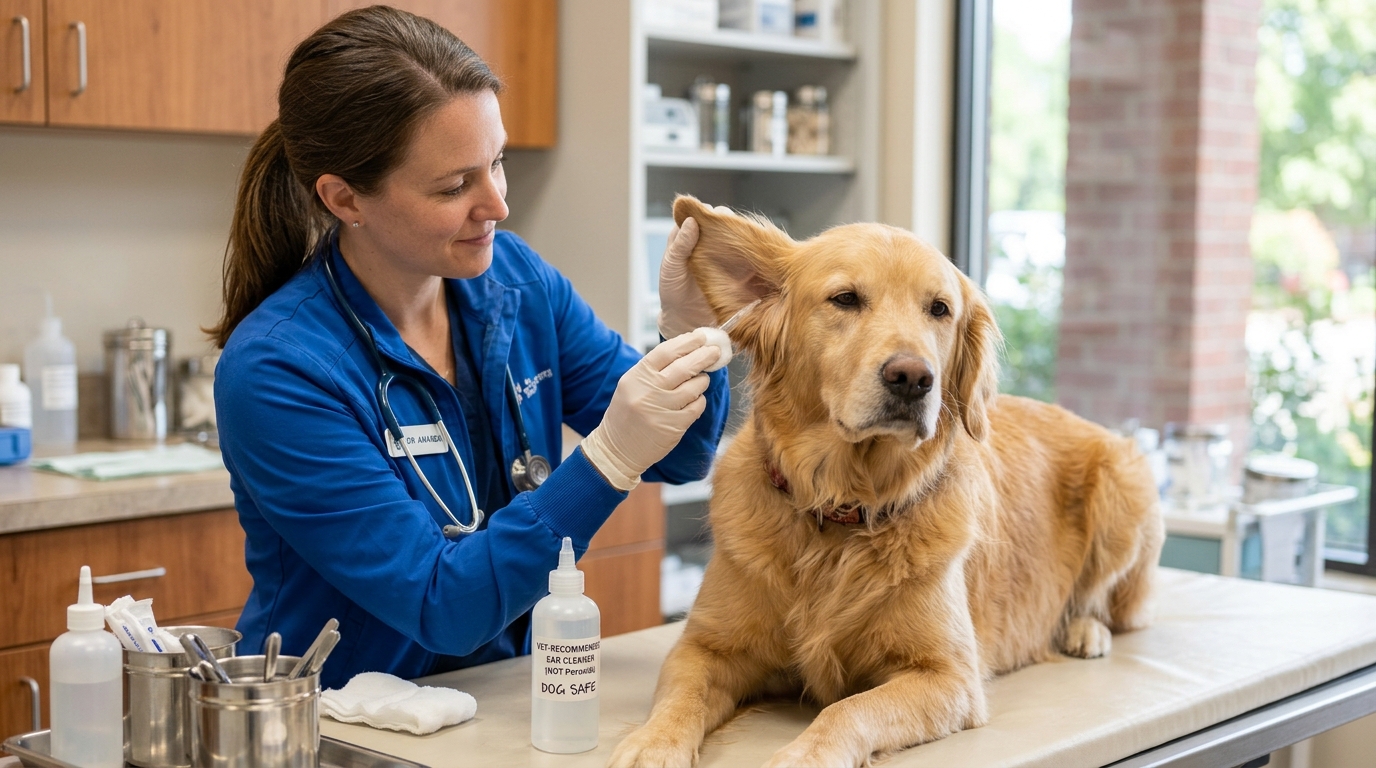
For healthy ears that just need routine cleaning, choose a veterinary-formulated ear cleaner. These are designed to be gentle, balanced to the ear’s natural pH, and often contain ingredients that help dry the canal. Here is a basic approach:
- Gather supplies. You’ll need a vet-approved ear cleaner, cotton balls or gauze, and a few treats.
- Get comfortable. Choose a calm moment and keep your dog relaxed.
- Apply the cleaner. Lift the ear flap and fill the canal with the amount recommended on the product label.
- Massage the base. Gently rub the base of the ear for 20 to 30 seconds. You should hear a squishing sound.
- Let your dog shake. This brings loosened debris up and out.
- Wipe the outer ear. Use cotton or gauze to clean only the parts you can see.
- Reward your dog. Praise and treats make future cleanings easier.
Avoid cotton swabs deep in the canal. They can push debris further in and may injure the eardrum.
How Often Should You Clean?
It depends on the dog. Many dogs with healthy, upright ears rarely need cleaning at all. Floppy-eared breeds, swimmers, and dogs with allergies may benefit from cleaning every few weeks or after baths and swimming. Over-cleaning can itself cause irritation, so ask your vet what schedule suits your dog.
When to See a Veterinarian
Book an appointment if you notice:
- Symptoms lasting more than a day or two
- Discharge, odor, or visible redness
- Signs of pain or sensitivity
- A head tilt, balance problems, or eye flicking
- Repeated ear infections
A vet can look inside the ear with an otoscope, check the eardrum, and take a sample to identify whether yeast, bacteria, or mites are involved. Treatment is then matched to the actual cause, usually with medicated drops or a professional cleaning. Untreated ear infections can become chronic and painful, so early care really does pay off.
Final Thoughts
So, can you put peroxide in a dog’s ear? For most pet owners, the safest answer is no. The risks of irritation, trapped moisture, and potential damage to the eardrum outweigh any benefit, especially when gentler, vet-approved alternatives exist. If your dog’s ears look or smell off, the best step is a quick visit to your veterinarian, who can find the real cause and get your dog comfortable again.
READ ALSO: https://aimodern.co.uk











Leave a Reply