

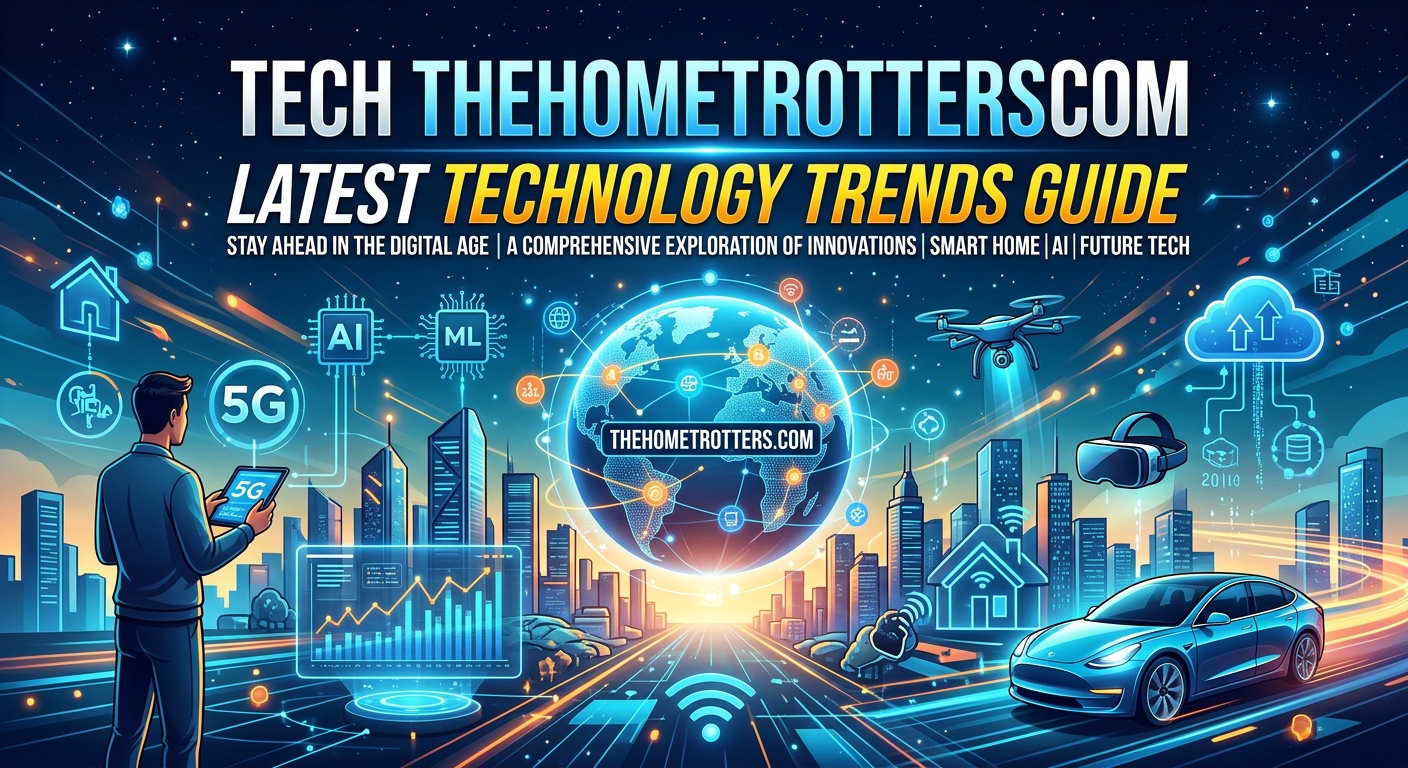
Technology moves quickly, and keeping up can feel like a full-time job. New gadgets, software updates, and buzzwords appear every week. This guide to tech thehometrotterscom topics cuts through the noise and covers the trends that matter for everyday life, from artificial intelligence to smart homes, so you can decide what is worth your time and money.
1. Artificial Intelligence Becomes Everyday Infrastructure
Artificial intelligence has moved from novelty to utility. Instead of being a standalone product, AI is now built into the tools people already use: email, search, photo editing, note-taking apps, and customer support.
What this means for you:
- Writing and productivity tools now draft, summarize, and organize information in seconds.
- Personal assistants are better at understanding context, so you can speak naturally instead of memorizing commands.
- Creative tools let beginners edit photos, generate designs, and produce video with little training.
The key is to treat AI as an assistant, not a replacement for judgment. Always check important facts, protect sensitive information, and read the privacy settings of any tool you adopt.
2. Smart Homes Get Simpler and More Connected
Smart home technology has matured. Early devices were often frustrating, with incompatible apps, confusing setups, and unreliable connections. That is changing thanks to universal standards that let devices from different brands work together.
Trends worth watching:
- Matter compatibility: This standard allows lights, locks, thermostats, and sensors from different manufacturers to communicate, which reduces the risk of being locked into one brand.
- Energy management: Smart thermostats, plugs, and monitoring tools help households see where electricity goes and cut waste.
- Security upgrades: Video doorbells, smart locks, and indoor sensors are more affordable and easier to install than ever.
If you are starting out, begin small. A smart plug or a couple of smart bulbs is a low-risk way to learn what you actually use before building a bigger system.
3. Wearables and Health Tech
Smartwatches, fitness rings, and wireless earbuds are evolving into serious wellness tools. Modern wearables track sleep, heart rate, activity, stress levels, and even irregular heart rhythms.
The real value lies in long-term patterns rather than daily numbers. A single poor night’s sleep means little, but a month of data can reveal habits worth changing. Keep in mind that these devices support healthy living but are not a substitute for medical advice. If a reading worries you, talk to a doctor.
4. The Smartphone Landscape: Smarter, Not Just Faster
Annual phone upgrades bring smaller changes than they once did, so the focus has shifted from raw speed to practical features:
- On-device AI for faster, more private processing of photos, voice, and text
- Better cameras with improved low-light performance and computational photography
- Longer battery life through efficient chips and smarter power management
- Longer software support, with some manufacturers promising many years of updates
Because phones last longer, many people no longer need to upgrade every year. Consider your actual needs, such as camera quality, storage, or battery, before paying for a new model.
5. Faster Connectivity: 5G, Wi-Fi 7, and Beyond
Connectivity is the backbone of every other trend. 5G networks continue to expand, offering lower latency and better speeds in many areas. At home, newer Wi-Fi standards handle many devices at once, which matters when phones, TVs, laptops, consoles, and smart gadgets all compete for bandwidth.
Practical tips:
- Place your router centrally and away from thick walls or appliances.
- Consider a mesh system for larger homes.
- Update router firmware regularly for security and performance.
- Use a separate network for smart devices and guests.
6. Cybersecurity and Privacy Take Center Stage
As more of life moves online, security matters more. Phishing attempts are more convincing, and data breaches are common. The good news is that basic habits provide strong protection.
- Use a password manager to create unique, strong passwords for every account.
- Enable two-factor authentication, preferably with an authenticator app or security key rather than text messages.
- Adopt passkeys where available, since they are harder to steal than traditional passwords.
- Keep software updated, because updates often patch serious vulnerabilities.
- Think before you click, especially on unexpected links and attachments.
Following tech thehometrotterscom style guides on digital safety is a good reminder that small, consistent habits matter more than expensive tools.
7. Sustainable and Energy-Efficient Technology
Sustainability is shaping product design. Consumers increasingly look for repairable devices, recycled materials, and energy-efficient performance. Electric vehicles, home solar panels, and battery storage continue to grow, and even small gadgets now highlight lower power consumption.
When buying new tech, consider repairability, battery replacement options, and trade-in or recycling programs. Extending the life of a device is often the greenest and most economical choice.
8. Remote Work and Hybrid Productivity Tools
Flexible work is now a permanent feature for many industries, and the tools supporting it keep improving. Video conferencing platforms offer automatic transcription and summaries, while collaboration apps centralize chat, documents, and project tracking.
To get the most from these tools:
- Choose one primary platform for each type of communication to avoid scattered messages.
- Use automation to handle repetitive tasks like scheduling and file organization.
- Invest in a quality microphone, webcam, and comfortable workspace. These improve results more than a new app.
9. Emerging Technologies to Keep an Eye On
Some innovations are still developing but may shape the next several years:
- Augmented and mixed reality: Headsets and glasses are improving, with uses in training, gaming, and design.
- Quantum computing: Still largely experimental, but progress could eventually transform fields like medicine and cryptography.
- Advanced robotics: Home and warehouse robots are becoming more capable and affordable.
- Next-generation batteries: Faster charging and longer-lasting cells could change everything from phones to cars.
You do not need to buy into these early. Understanding where they are heading helps you make smarter decisions when they become mainstream.
How to Choose Technology Wisely
With so many options, a simple framework helps you avoid wasteful purchases:
- Define the problem. Buy technology to solve a specific need, not because it is new.
- Check compatibility. Make sure it works with the devices and apps you already own.
- Read independent reviews. Look for long-term feedback, not only launch-day hype.
- Consider total cost. Subscriptions, accessories, and replacement parts add up.
- Prioritize privacy and support. Reliable updates and clear data policies are signs of a trustworthy product.
Final Thoughts
The latest technology trends point in one direction: tools that are smarter, more connected, and more integrated into daily life, while also demanding more attention to privacy and sustainability. You do not have to adopt everything. Pick the trends that fit your routine, learn them gradually, and protect your data along the way.
Whether you are upgrading your home, improving your workflow, or simply staying informed, a trusted source makes the difference. Keep exploring tech thehometrotterscom content to stay current, and remember that the best technology is the kind that quietly makes your life easier.
READ ALSO: https://aimodern.co.uk














Leave a Reply