

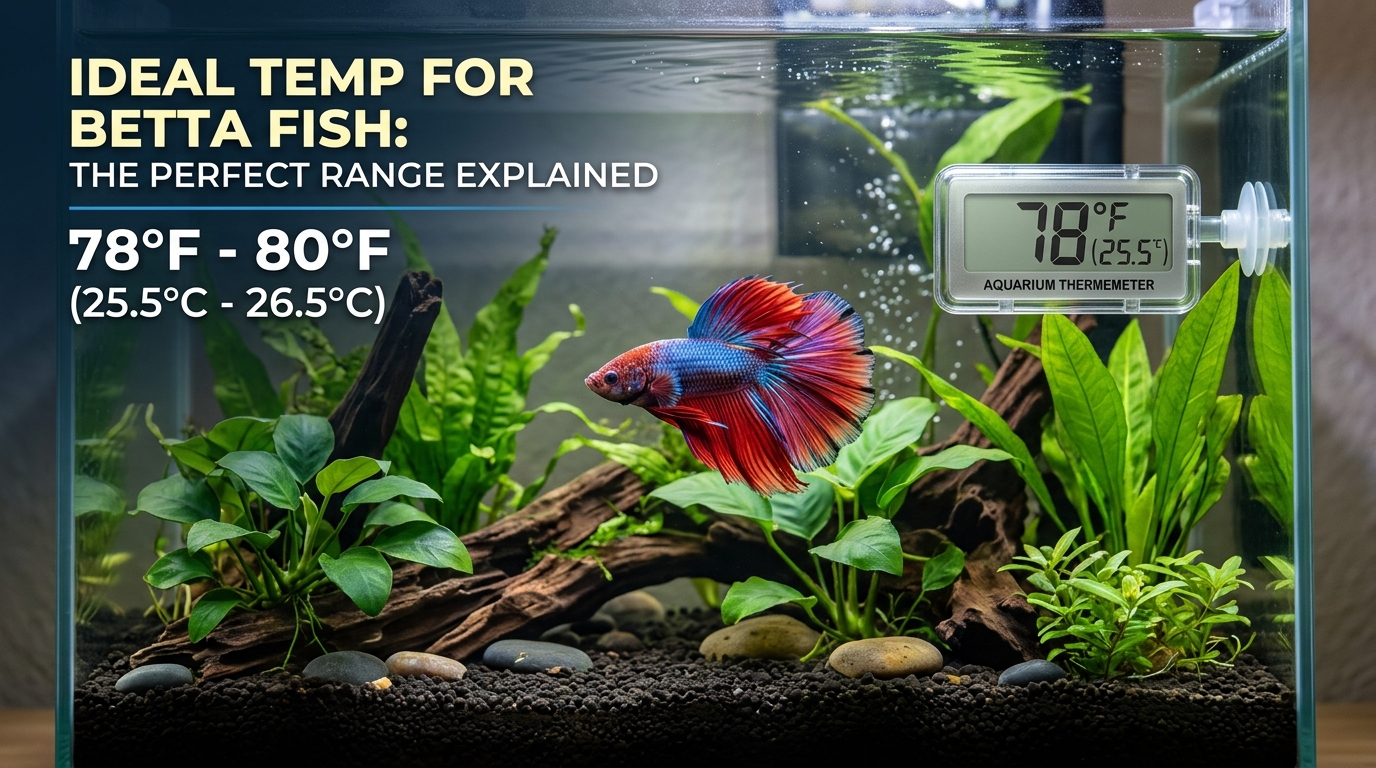
Betta fish are among the most popular aquarium pets, known for their flowing fins and bold personalities. Behind that beauty is a fish with very specific needs, and water temperature is one of the most important. Get it wrong and your betta can become sluggish, stressed, or sick. Get it right and you will see a more active, colorful, and longer-lived fish. This guide explains the ideal temp for betta fish, why it matters, and how to maintain it all year round.
The Short Answer: 78°F to 80°F
Most experts agree the best water temperature for a betta is 78°F to 80°F (25.5°C to 26.5°C). Within this narrow band, your betta’s metabolism, digestion, and immune system work at their best. Bettas can tolerate a slightly wider range of 76°F to 82°F (24°C to 28°C) without trouble, but the middle of that range is where they thrive.
Why Temperature Matters So Much
Bettas are tropical fish native to the warm, shallow waters of Southeast Asia, including rice paddies, slow streams, and floodplains in Thailand, Cambodia, and Vietnam. These waters stay warm year-round, so bettas never evolved to cope with big temperature swings.
Bettas are also cold-blooded, which means they cannot regulate their own body temperature. Their bodies match the water around them, so the water temperature directly controls how fast their body functions run.
- Digestion: In warm water, food is digested efficiently. In cold water, digestion slows, which can lead to bloating, constipation, and swim bladder problems.
- Immunity: A betta kept at the right temperature can fight off bacteria, fungi, and parasites far more effectively.
- Energy and behavior: Warm, stable water keeps your betta active, curious, and willing to eat.
What Happens When the Water Is Too Cold?
Cold water is the most common temperature problem for pet bettas. Many people assume a small desk bowl at room temperature is fine, but most homes are cooler than a betta needs, especially at night or in winter.
When the water drops below 76°F, you may notice:
- Lethargy and long periods resting at the bottom of the tank
- Loss of appetite
- Faded colors
- Clamped fins held tightly against the body
- Increased susceptibility to diseases like ich, fin rot, and velvet
Below 72°F, the risk becomes serious. Prolonged exposure to cold water can be fatal, and bettas kept in unheated tanks often have noticeably shorter lifespans.
What Happens When the Water Is Too Hot?
Overheating is less common but just as dangerous. Water above 82°F starts to stress your betta, and anything above 86°F is an emergency. Warm water also holds less dissolved oxygen, so a betta in overheated water may struggle to breathe.
Signs of overheating include:
- Rapid gill movement
- Frantic swimming or darting
- Gasping at the surface
- Bright red gills
- Unusual restlessness followed by exhaustion
This can happen in summer if a tank sits near a sunny window, or if a faulty heater malfunctions. Always keep your tank out of direct sunlight.
How to Reach the Ideal Temp for Betta Care
Maintaining the right temperature takes only a few pieces of equipment and some routine checks.
1. Use an Adjustable Aquarium Heater
A good heater is the single most important investment. Choose an adjustable model rather than a fixed-temperature one, so you can fine-tune the setting. A general rule is about 5 watts per gallon. For a 5-gallon tank, a 25-watt heater is usually enough, while a 10-gallon tank may need 50 watts.
Look for heaters with a built-in thermostat and an automatic shut-off feature. Place the heater near the filter outflow so warm water circulates evenly through the tank.
2. Add a Reliable Thermometer
Never trust the heater’s dial alone. Dials are often inaccurate by several degrees. A simple stick-on or digital thermometer placed on the opposite side of the tank from the heater gives you a true reading of the water your fish is actually swimming in. Check it daily.
3. Choose the Right Tank Size
Bigger is better when it comes to temperature stability. Small bowls and tiny tanks heat up and cool down quickly, making them hard to keep stable. A tank of at least 5 gallons, and ideally 10 gallons or more, holds heat far more consistently and gives your betta room to swim.
4. Keep the Temperature Stable
Stability matters almost as much as the number itself. Rapid swings of more than 2°F to 3°F within a day can stress your betta, even if the temperatures are technically in the safe range. A heater with a good thermostat prevents these fluctuations.
5. Place the Tank Wisely
Avoid putting the aquarium near windows, air conditioning vents, radiators, or exterior doors. Drafts and direct sunlight can push the temperature up or down fast. A quiet interior spot gives the heater an easier job.
Special Situations to Watch For
Water changes: Always match the temperature of new water to the tank water before adding it. Pouring in cold tap water can shock your betta. Use a thermometer to check, and let the new water warm slightly if needed.
Bringing a new betta home: Float the sealed bag in the tank for 15 to 20 minutes so the temperature equalizes, then acclimate your betta gradually to the new water.
Power outages: If the heater loses power in cold weather, wrap the tank in towels or blankets to slow heat loss, and avoid opening the lid. For longer outages, replace some water with warm (not hot) water in small amounts.
Seasonal changes: Check your thermometer more often during seasonal transitions. A tank that holds 79°F in summer may drop several degrees once winter arrives and the house cools.
Quick Reference Chart
| Temperature | Effect on Your Betta |
|---|---|
| Below 72°F | Dangerous; high illness risk |
| 72°F to 75°F | Too cool; sluggish and stressed |
| 76°F to 77°F | Acceptable but on the low side |
| 78°F to 80°F | Perfect range |
| 81°F to 82°F | Acceptable but on the high side |
| 83°F to 85°F | Stressful; watch oxygen levels |
| Above 86°F | Dangerous; act immediately |
Final Thoughts
Betta fish are hardier than their delicate looks suggest, but they depend on warm, stable water to stay healthy. Aim for the ideal temp for betta fish of 78°F to 80°F, back it up with a quality heater and thermometer, and avoid sudden swings. With these simple steps, you will give your betta the comfortable home it needs to live a long, vibrant life, often 3 to 5 years or more. Temperature may seem like a small detail, but for a tropical fish like the betta, it makes all the difference.
READ ALSO: https://aimodern.co.uk













Leave a Reply