

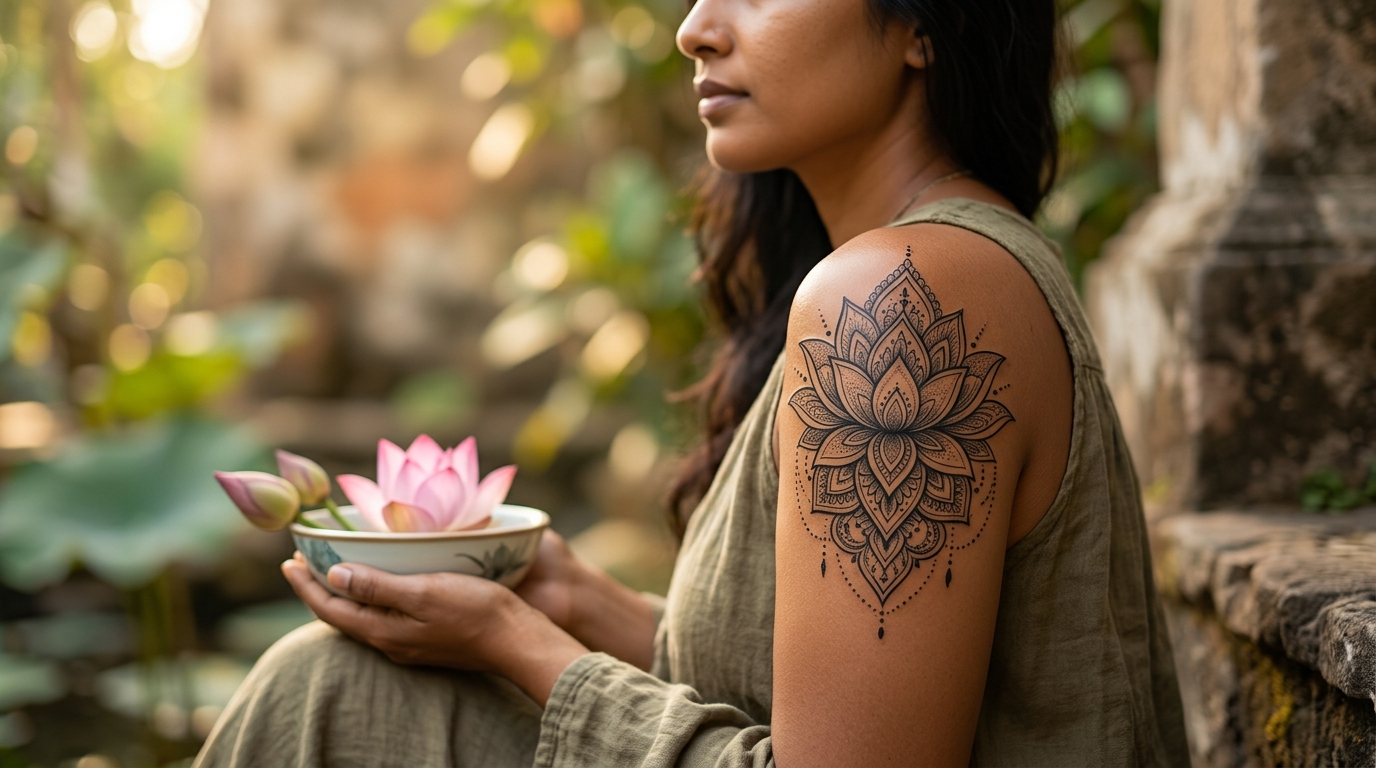
Few designs combine visual elegance and spiritual depth as well as the lotus mandala. Delicate petals unfold inside precise geometric patterns, creating a piece that looks stunning on skin and carries layers of personal significance. If you’re considering one, understanding the lotus mandala tattoo meaning will help you choose a design that reflects who you are and where you are in life.
Two Ancient Symbols, One Powerful Design
A lotus mandala tattoo fuses two symbols with deep roots in Eastern spirituality. Each tells its own story, and together they form something richer than either alone.
The Lotus: Rising Above Difficulty
The lotus grows in muddy, stagnant water, yet it emerges clean and radiant. Each morning its blossom opens above the surface, untouched by the murk below. For thousands of years, this image has stood for purity, resilience, and spiritual awakening.
In Buddhism, the lotus represents the journey from suffering to enlightenment. In Hinduism, it connects to deities such as Lakshmi and Vishnu and symbolizes divine beauty, prosperity, and creation. Ancient Egyptians tied the lotus to the sun, rebirth, and the cycle of life. Across these cultures, the message stays consistent: beauty and growth can come from hardship.
The Mandala: A Map of Wholeness
The word “mandala” comes from Sanskrit, and most people translate it as “circle.” A mandala starts from a central point and grows outward in repeating patterns of perfect balance. Hindu and Buddhist practitioners use mandalas as meditation tools that represent the universe, the self, and the path toward inner harmony.
The circular form suggests unity, eternity, and the idea that everything connects. Looking at a mandala can calm the mind and draw attention inward, which explains why meditation and mindfulness practices embrace it.
The Deeper Lotus Mandala Tattoo Meaning
When the two symbols combine, the result speaks to personal transformation within a balanced, interconnected world. The lotus provides the story of growth, while the mandala provides the structure of wholeness. Together, they say: I have grown through difficulty, and I am seeking harmony within myself.
Common interpretations include:
- Spiritual awakening: The unfolding petals mirror the opening of consciousness and the pursuit of enlightenment.
- Resilience and renewal: Wearers often choose the design after they overcome grief, illness, addiction, or a major life change.
- Balance and harmony: The symmetry reflects a desire for equilibrium between mind, body, and spirit.
- Purity and inner peace: The lotus’s untouched blossom stands for a clear heart and a calm mind.
- Cycles of life: The circular form, along with the lotus’s nightly closing and morning reopening, points to rebirth and continuity.
Because the symbolism adapts so easily, two people can wear nearly identical designs and attach entirely different stories to them. That personal flexibility explains much of the tattoo’s lasting popularity.
How Color Shapes the Symbolism
Traditionally, the color of the lotus adds another layer of meaning:
- White lotus: Spiritual perfection, purity of mind, and enlightenment.
- Pink lotus: The highest lotus, which people often associate with the Buddha and with devotion.
- Blue lotus: Wisdom, knowledge, and the victory of the spirit over the senses.
- Red lotus: Love, compassion, and the qualities of the heart.
- Purple lotus: Mysticism and spiritual awakening, which often connects to the eight-petaled lotus.
Many people also choose blackwork or fine-line designs, which emphasize the geometry and give the tattoo a timeless, graphic quality. Others prefer watercolor gradients that soften the structure and bring out the lotus’s natural beauty.
Petals, Patterns, and Placement
The details of your design matter. The number of petals can carry meaning: eight petals often link to the Noble Eightfold Path in Buddhism, while a thousand-petaled lotus symbolizes the crown chakra and ultimate spiritual realization. Layered petals can suggest stages of growth, with each ring representing a new level of understanding.
Placement also shapes the tattoo’s impact:
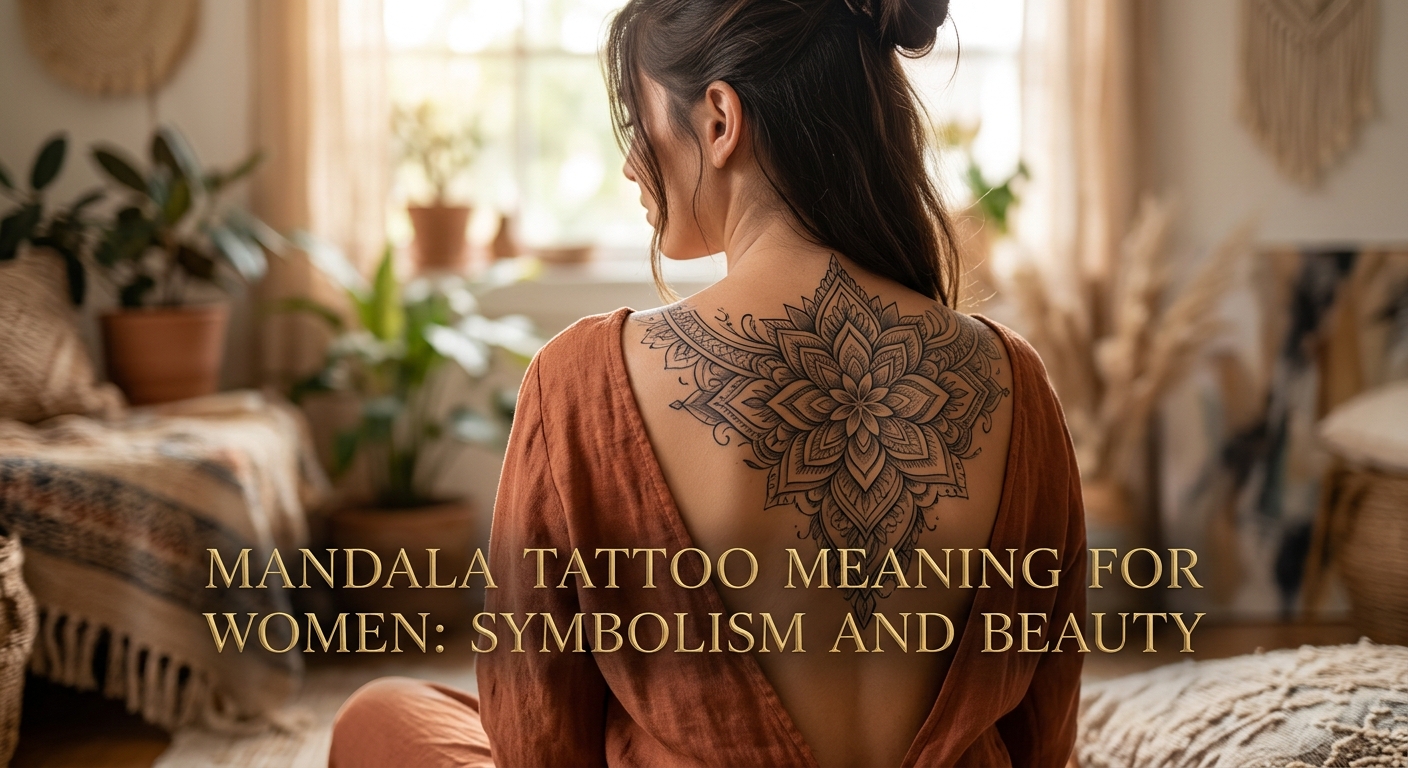
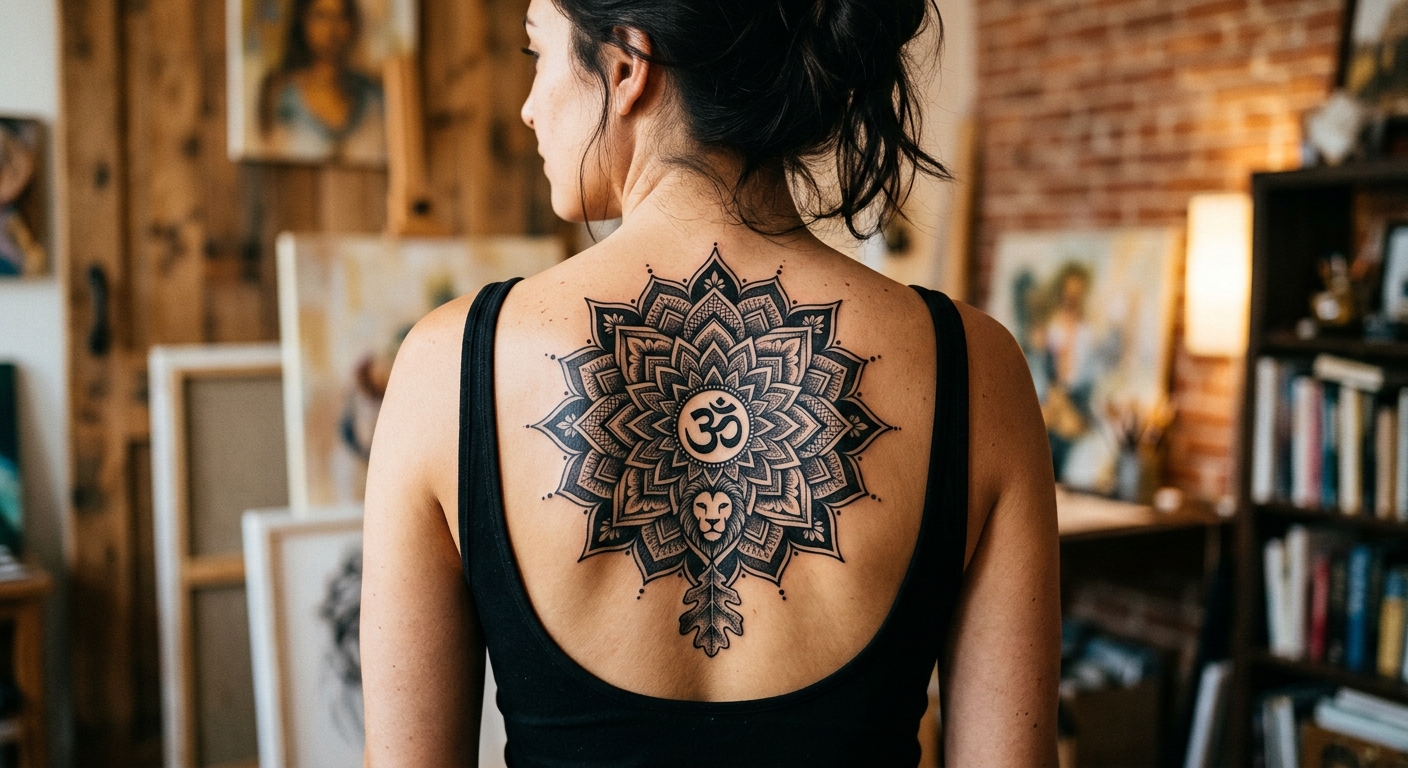
- Back or shoulder blade: Large, detailed mandalas have room to breathe, and the placement feels personal and protected.
- Chest or sternum: A spot near the heart emphasizes compassion and emotional centering.
- Forearm: This visible location works well for those who want a daily reminder of their inner journey.
- Thigh: It offers a broad canvas for intricate patterns, and you can cover it when needed.
- Ankle or wrist: Smaller, minimalist designs suit these areas and feel quietly intimate.
Some people center the design on the spine to reflect energy flow and alignment, while others choose a spot over the heart or lower back to match a particular chakra.
Why the Design Looks So Beautiful
Beyond symbolism, the lotus mandala simply looks gorgeous. Radial symmetry creates a naturally pleasing composition, and the contrast between organic petals and sharp geometric lines gives the artwork a sense of movement. Dotwork shading, fine linework, and negative space let artists create depth without overwhelming the skin. The design also adapts to nearly any style, from traditional to modern minimalist, so you can customize it to suit your taste.
Tips Before You Get Your Tattoo
- Reflect on your meaning. Think about what the lotus and mandala represent to you personally before you settle on a design.
- Choose a skilled artist. Mandala work demands precision. Look for portfolios that show clean lines, even spacing, and consistent symmetry.
- Respect the cultural roots. Several traditions hold these symbols sacred. Learn about their origins and treat them with care rather than as a purely decorative trend.
- Plan for size. Intricate detail needs enough space to stay crisp as the tattoo ages. Very small, tightly packed designs can blur over time.
- Follow aftercare. Keep the tattoo clean, moisturized, and out of the sun to preserve fine lines.
Final Thoughts
A lotus mandala tattoo is more than body art. It serves as a visual reminder that growth often begins in difficult conditions and that you can find balance by looking inward. Whether you choose it to mark a turning point, honor your spiritual path, or simply embrace its beauty, understanding the lotus mandala tattoo meaning keeps your ink meaningful for years to come. Take your time with the design, work with an artist who understands the symbolism, and let the lotus bloom in a way that feels uniquely yours.
READ ALSO: https://aimodern.co.uk






Leave a Reply