

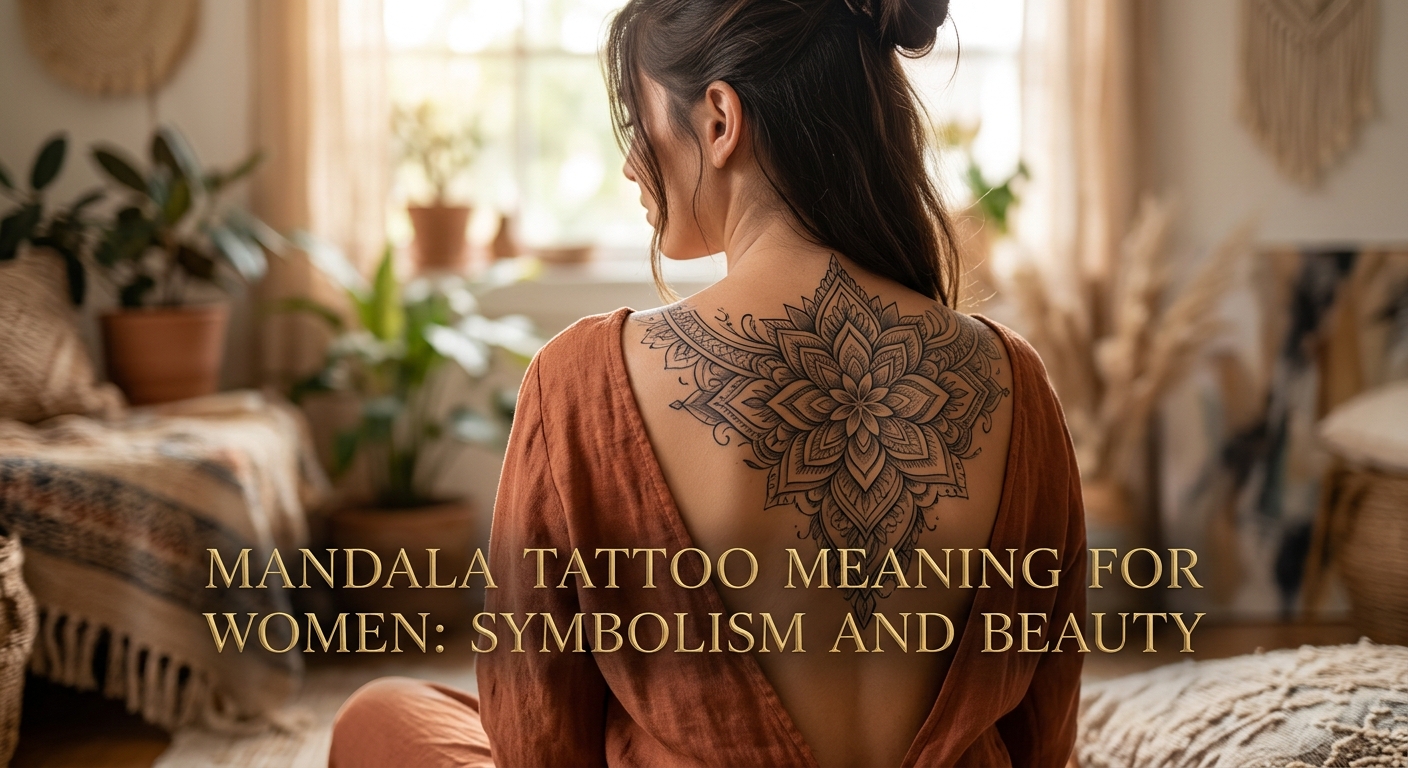
Few designs carry as much quiet power as the mandala. With its perfectly balanced circles, intricate petals, and radiating patterns, a mandala draws the eye inward and invites a moment of calm. It is no surprise that this ancient symbol has become one of the most loved tattoo choices today. If you are exploring the mandala tattoo meaning woman after woman describes as deeply personal, you are in the right place. This guide walks through the history, symbolism, design styles, and placement ideas that make this tattoo so beautiful and so meaningful.
What Is a Mandala?
The word “mandala” comes from Sanskrit and translates roughly to “circle” or “discoid object.” Mandalas first appeared in Hinduism and Buddhism, where they were used as sacred diagrams for meditation, prayer, and spiritual teaching. Monks in Tibet still create elaborate sand mandalas, spending days placing colored grains into precise patterns before sweeping them away, a ritual that reminds us nothing lasts forever.
At its core, a mandala represents the universe and our place within it. The center point stands for the self or the source of all things, while the surrounding rings and patterns symbolize the layers of life, growth, and connection. Over centuries, this sacred geometry traveled across cultures, appearing in Native American medicine wheels, Islamic tilework, and Gothic rose windows. Today, it lives on skin as a deeply personal form of art.
The Core Symbolism Behind Mandala Tattoos
Every mandala is unique, yet certain themes appear again and again.
Wholeness and unity. The circle has no beginning and no end. A mandala tattoo often represents completeness, the idea that every experience, joyful or painful, belongs to a single complete life.
Balance and harmony. Because mandalas are built on symmetry, they symbolize equilibrium between mind and body, strength and softness, giving and receiving.
The journey inward. Traditionally, mandalas guide the viewer from the outer edges toward the center. In a tattoo, this can mean self-discovery, healing, and a return to who you truly are.
Impermanence and renewal. The Tibetan sand tradition teaches that life is always changing. Many people choose a mandala to mark a new chapter, a recovery, or a decision to let go.
Protection and spiritual connection. In many traditions, mandalas act as a protective symbol and a doorway to meditation, grounding the wearer in times of stress.
Mandala Tattoo Meaning for a Woman’s Personal Journey
While the symbolism above applies to anyone, the mandala tattoo meaning woman often shapes around her own story is especially rich. Many women describe their mandala as a celebration of feminine energy: cyclical like the moon, nurturing like the earth, and powerful in its calm. The repeating, flowing petals echo the cycles of life, from girlhood to motherhood to wisdom in later years.
For some women, a mandala marks survival. It might commemorate overcoming illness, leaving a difficult relationship, or finding peace after loss. For others, it honors motherhood, with each ring representing a child, a generation, or a family bond. Some women simply love the way it expresses their inner stillness in a noisy world.
What makes a mandala so adaptable is that you can weave personal meaning directly into the design. Birth flowers, lotus blossoms, moon phases, initials in hidden script, or dots representing loved ones can all be built into the pattern. The result is a tattoo that looks graceful to everyone and reads like a private diary to you.
Popular Elements and What They Mean
The details inside a mandala can shift its message dramatically.
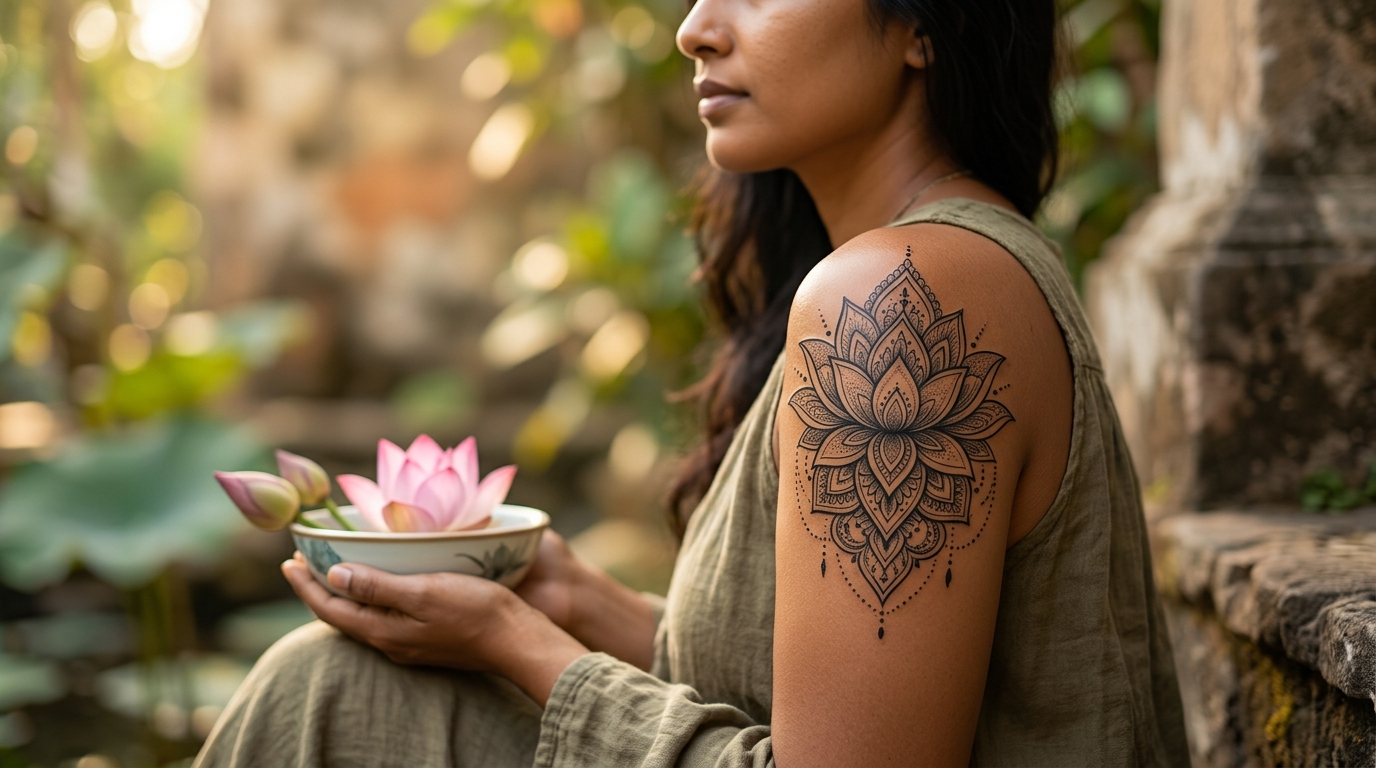
- Lotus petals: Purity, spiritual awakening, and rising above hardship. The lotus grows from mud into a flawless bloom.
- Dots and beads: Often arranged in rings, they can symbolize meditation, mala prayer beads, or milestones in your life.
- Moon and sun motifs: Femininity, cycles, intuition (moon) and vitality, confidence (sun).
- Feathers and leaves: Freedom, growth, and connection to nature.
- Geometric triangles and stars: Direction, ambition, and spiritual guidance.
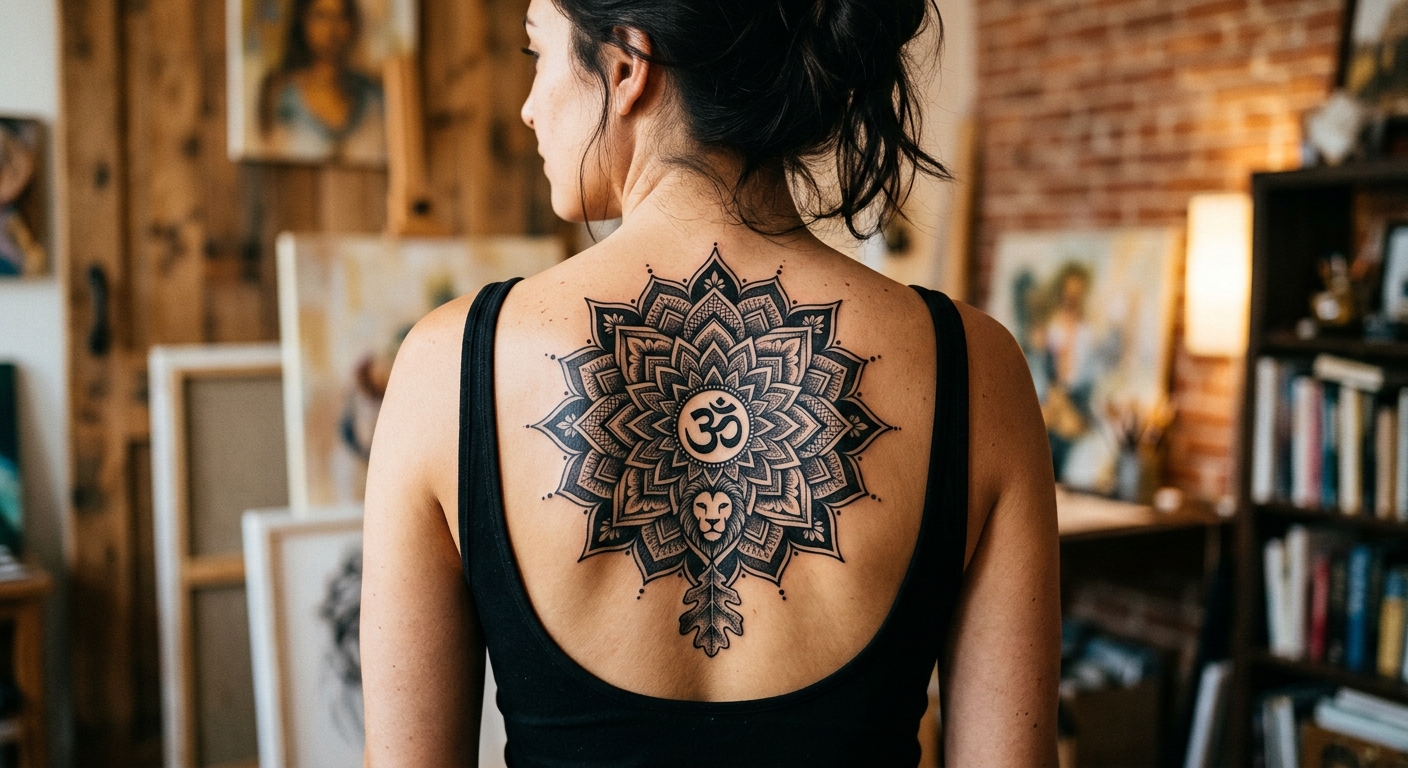
- Eyes or sacred symbols: Protection and insight, sometimes drawn from Om or hamsa traditions.
Color matters too. Black ink and fine linework create an elegant, timeless look, while watercolor mandalas bring in soft blues for calm, pinks for love and compassion, purples for spirituality, and golds or oranges for energy and joy.
Styles That Suit Different Personalities
There is a mandala style for every taste.
Fine line and minimalist: Delicate and subtle, perfect for a first tattoo or a discreet placement.
Dotwork: Thousands of tiny dots build depth and texture, giving the design a meditative, almost hypnotic quality.
Watercolor: Soft gradients and splashes of color for women who want a dreamy, artistic piece.
Blackwork: Bold, high-contrast patterns with striking presence.
Floral mandala: A blend of blossoms and geometry that highlights softness and natural beauty.
Take time to look at artists’ portfolios before choosing. Precision matters enormously with mandalas, since even small errors in symmetry are noticeable. An artist experienced in geometric and dotwork designs will make a significant difference.
Best Placements for Mandala Tattoos
Placement shapes how the design is seen and felt.
- Back or spine: A large, centered mandala between the shoulder blades feels symbolic and grand.
- Shoulder and upper arm: Round shapes follow the natural curve, creating a graceful cap or sleeve starter.
- Thigh: Plenty of space for detailed, large-scale work.
- Forearm and wrist: Easy to see, a daily reminder of your intention.
- Behind the ear or neck: Small and delicate for a subtle touch.
- Ankle and foot: A dainty design that peeks out with sandals.
- Sternum: Close to the heart, often chosen for deeply personal meaning.
Consider pain levels, visibility at work, and how the tattoo will age. Areas with thin skin, like ribs or feet, can be more painful, and very fine details may soften over time, so ask your artist how to keep lines crisp.
Tips Before You Get Inked
Start by clarifying what you want the tattoo to say. Write down words, memories, or feelings, then share them with your artist so the design is truly yours rather than a copy from the internet. Respect the sacred origins of the symbol by learning a bit about its history, and avoid placing it somewhere you would consider disrespectful, such as the lower body, if its spiritual roots matter to you. Finally, follow aftercare carefully: keep it clean, moisturized, and out of direct sun so the design stays sharp for years.
Final Thoughts
A mandala is more than a pretty pattern. It is a circle of meaning that holds balance, healing, growth, and connection in one design. Understanding the mandala tattoo meaning woman wearers cherish helps you choose a design that reflects your own path rather than a passing trend. Whether you pick a tiny fine-line piece behind your ear or an expansive dotwork masterpiece across your back, a thoughtfully designed mandala will remain a beautiful reminder of who you are and how far you have come.
READ ALSO: https://aimodern.co.uk






Leave a Reply